

Twój koszyk
Twój koszyk jest pusty
Join us



Aktualności firmowe
Nasze przyprawy
Nasze cukry
Nasze kapsle
-
 Crown Caps 26mm TFS-PVC Free, Złoty col. 2311 (10000/box)
Dodaj do koszyka
Crown Caps 26mm TFS-PVC Free, Złoty col. 2311 (10000/box)
Dodaj do koszyka
-
 Kegcaps 64 mm, Czerwony 1485 Sankey S-type (EU) (1000/box)
Dodaj do koszyka
Kegcaps 64 mm, Czerwony 1485 Sankey S-type (EU) (1000/box)
Dodaj do koszyka
-
 Kegcaps 69 mm, Brown 154 Grundey G-type (850/box)
Dodaj do koszyka
Kegcaps 69 mm, Brown 154 Grundey G-type (850/box)
Dodaj do koszyka
-
 Kapsle 26mm TFS-PVC Free, Dark Green Transparent col. 2251 (10000/box)
Dodaj do koszyka
Kapsle 26mm TFS-PVC Free, Dark Green Transparent col. 2251 (10000/box)
Dodaj do koszyka
-
 Kapsle 26mm TFS-PVC Free, Cyan Transparent col. 2892 (10000/box)
Dodaj do koszyka
Kapsle 26mm TFS-PVC Free, Cyan Transparent col. 2892 (10000/box)
Dodaj do koszyka
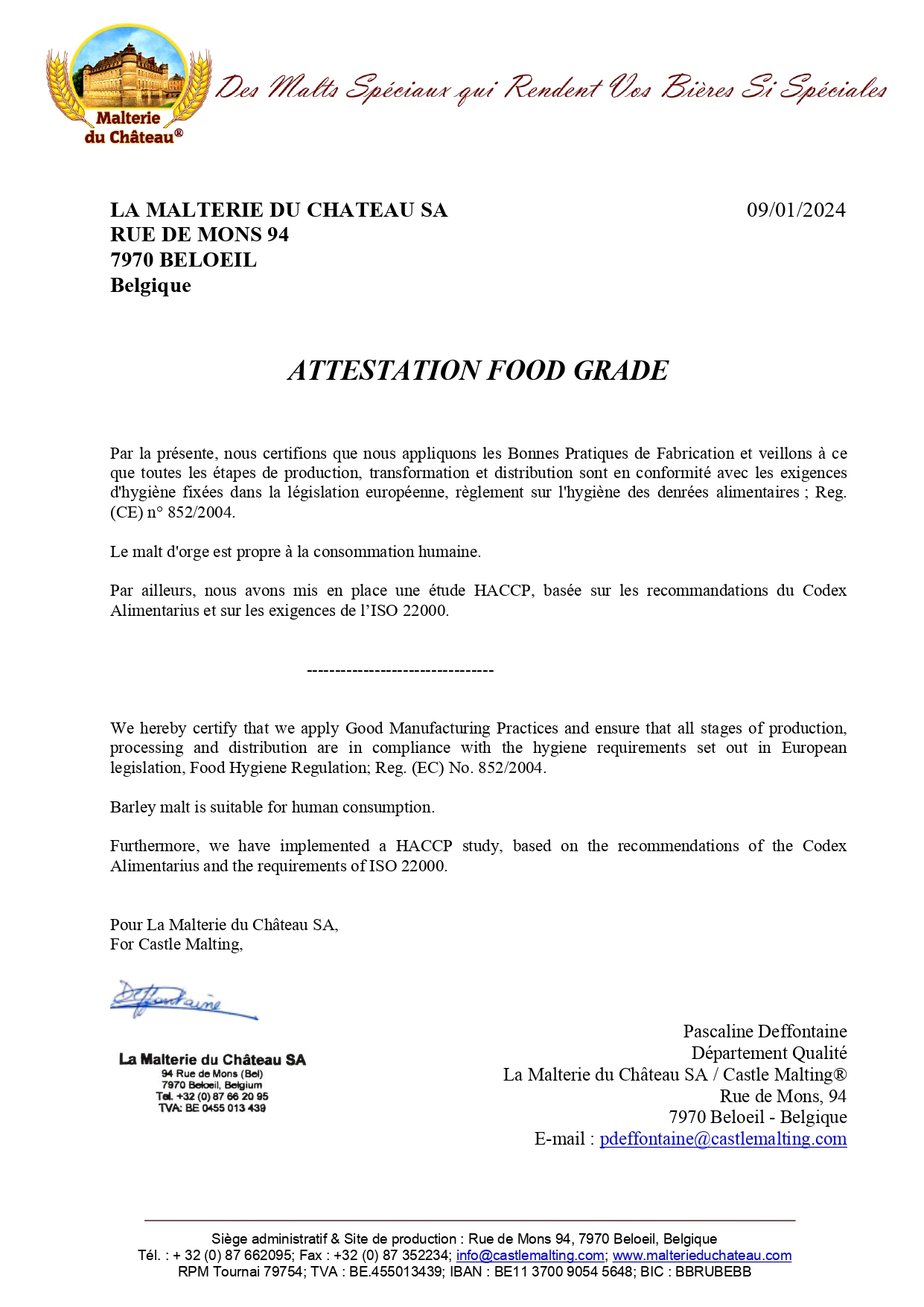 Malt Attestation GMP & HACCP 2026 (ENG) (FR)
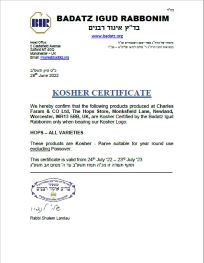 ChF - Hops Kosher Certificate 2022-2023
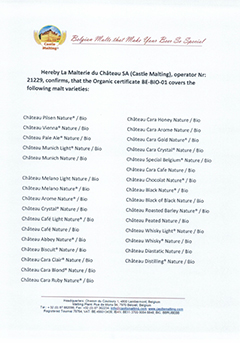 List of organic malts - Castle Malting
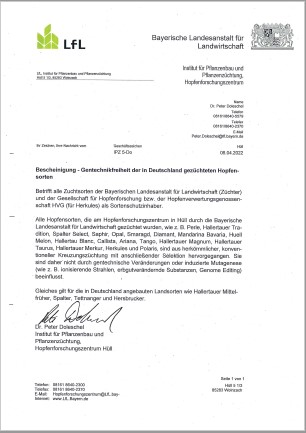 Hops, HVG, non-GMO Certificate 2022, DE
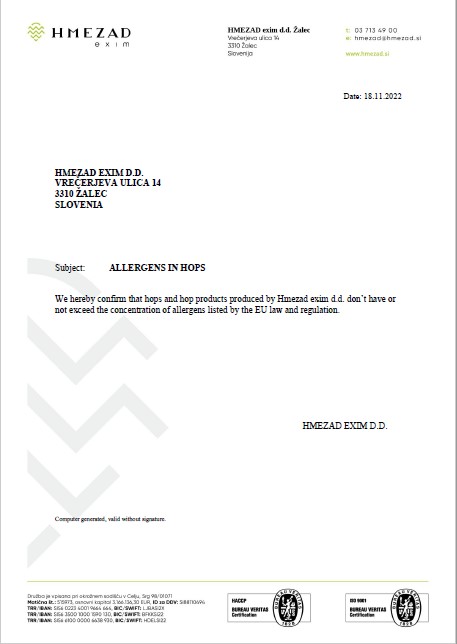 HMEZAD Hops - Certificate allergens in hops 2022
Słowniczek
Facility where hops are dried and processed.
1) A beer festival held annually in Münich's Theresienwiese (Theresa's Meadow) for sixteen days and nights in late September and early October. The festival originated with the wedding festivities of the Bavarian heir prince Ludwig to the princess Theresa in 1810.
2) A bottom-fermented Vienna- or Marzen-style beer originally brewed especially for the Oktoberfest but now available year round.
2) A bottom-fermented Vienna- or Marzen-style beer originally brewed especially for the Oktoberfest but now available year round.
A British-style ale that is medium strong and dark.
Sugars of more than three molecules, less complex than dextrins. They are intermediate fractions that occur during the reduction of starch during mashing and are not fermentable by yeast.
The practice of carrying out the initial fermentation in an open vessel. Some traditional English and Belgian breweries, and even a small number of contemporary US microbreweries, use open fermentation. With the exception of Belgian Lambics, open fermentation requires the use of large quantities of healthy yeast, in order to overpower any undesirable microbes which may fall into the wort.
A gold to copper colored, low alcohol, low carbonation English-style ale.
Basically the chemistry of natural or synthetic carbon compounds with Chemistry carbon combining mainly with O, H, N, S, P.
Abbreviated O.G. Strictly speaking, the specific gravity, but usually taken Gravity to mean the degree Balling or Plato of the wort leaving the brew kettle.
The specific gravity of a wort prior to fermentation. See final gravity.
A circular gasket, usually made of rubber. O-rings come in different shapes and sizes. On soda kegs, they are used to ensure a gas-tight seal on the main lid, the liquid and gas fittings, and between the dip tubes and the keg body. O-rings will eventually deteriorate, and must be replaced occasionally.
The pressure differential that exists between two solutions of different Pressure concentration when placed on opposite sides of a semi-permeable membrane.
In a broad sense, oxidation is the increase in positive valence or decrease in negative valence of any element in a substance. On the basis of the electron theory, oxidation is a process in which an element loses electrons. In a narrow sense, oxidation means the chemical addition of oxygen to a substance.
A gas which comprises about 21% of normal air. Yeast require oxygen for healthy reproduction; this is why the wort should be aerated at pitching time. At any other stage of the brewing or fermentation process, oxygen is not desirable, because it can oxidize compoinds in the wort or beer, resulting in stale flavors.
The addition of oxygen in the wort. This is done to help provide the yeast with oxygen for a healthy fermentation.