

E-Malt news
Americas: Heineken appoints Alex Carreteiro as Regional President Americas
Europe: Europe’s beer market continues to contract for the fifth consecutive year
UK: AHDB releases 2026/2027 recommended lists of cereals and oilseeds
USA, MD: Watchtower Brewing Company becomes Aberdeen’s first brewery
Vores malt


Vores humle

New Hops

Vores gær


Vores krydderier



Vores sukker
Vores kapsler
-
 Kegcaps 64 mm, Brown 154 Sankey S-type (EU) (1000/papkasse)
Tilføj kurv
Kegcaps 64 mm, Brown 154 Sankey S-type (EU) (1000/papkasse)
Tilføj kurv
-
 CC29mm TFS-PVC Free, White with oxygen scav.(7000/papkasse)
Tilføj kurv
CC29mm TFS-PVC Free, White with oxygen scav.(7000/papkasse)
Tilføj kurv
-
Kegcaps 64 mm, Gold 116 Sankey S-type (EU) (1000/papkasse)
Tilføj kurv
-
Kegcaps 64 mm, White 86 Sankey S-type (EU) (1000/papkasse)
Tilføj kurv
-
 Kegcaps 69 mm, Grøn 147 Grundey G-type (850/papkasse)
Tilføj kurv
Kegcaps 69 mm, Grøn 147 Grundey G-type (850/papkasse)
Tilføj kurv
Certifikater
-
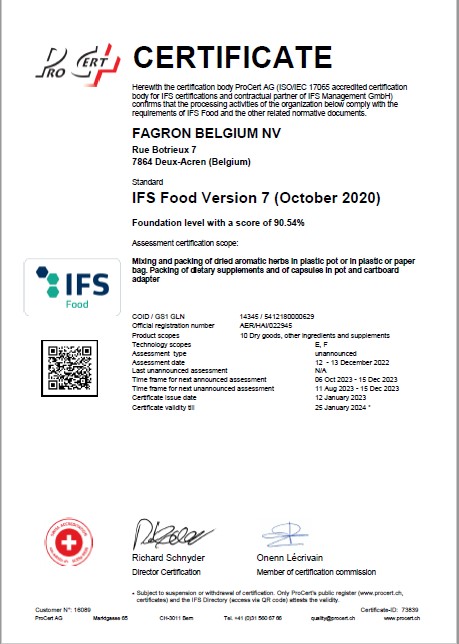 Fagron Spices, IFSFood Certificate 16089, EN 2024
-
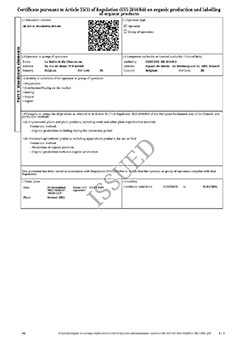 Organic Certificate ENG: Malt, Hops, Spices and Sugar - Jul 2025-Mar 2028
-
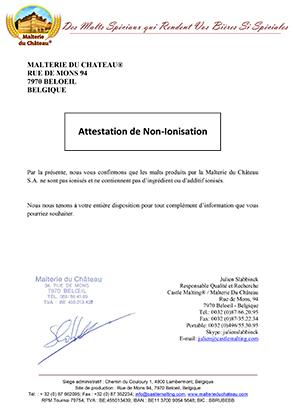 Castle Malting Malt Non Ionization Certificate FR
-
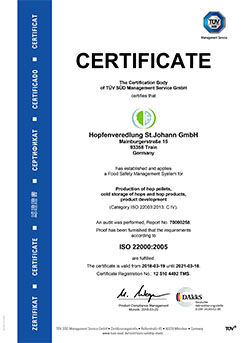 Hops Hopfenveredlung St.Johann, Certificate ISO 22000:2005 2021-2024
-
 Malt Attestation of Conformity for pesticides and contaminants 2024 (ENG)
Forslag
Join us



 Australia: Both malting and feed barley prices settle into a sideways trend
Since early 2022, the prices of both Australian malting and feed barley have steadily fallen before recently settling into a sideways trend. This price decline has occurred despite the ongoing high rate of barley exports, largely driven by very strong Chinese demand, RMI Analytics said in their latest report.
Following the lifting of the restrictive Chinese tariff on Australian barley in August 2023, Australian exports have surged. So far in 2025, China has imported 3.8 million tonnes of barley, which accounts for nearly 74% of all Australian barley exports. Of these shipments to China, 79% are categorized as feed barley, while 21% are classified as malting barley (noting that a proportion of the feed barley is actually put through the malting process). The export pace to China was robust in Q1 2025, but has experienced a slight slowdown during in Q2 2025.
From a statistical perspective, both malting and feed barley prices are expected to trend sideways. Malting barley prices are forecast to climb over the next three months before drifting lower. Feed barley prices are to decline into harvest, but then should bounce higher in November-December 2025, before falling back down again in early 2026.
The turnaround in Australia’s barley crop development over the past three months has been nothing short of amazing. From severe dryness concerns during May 2025, conditions are now nearly perfect, due to widespread rainfall across all major barley producing regions. While Western Australia, South Australia, and western Victoria need normal moisture in the weeks ahead to finish the crop, the northern New South Wales crop looks ideal, and with good soil moisture levels existing. This improvement in the Australian crop is evidenced in RMI Analytics’ price forecasts for both malting and feed barley over the next six months.
Tilbage